Showing posts with label musings. Show all posts

Wednesday, May 25, 2016

Men Filming Women in Peril

D.W. Griffith liked filming women trapped in ambushed cabins, alongside men who see only one option left to help her,

The Lesser Evil (1912)
The Battle at Elderbush Gulch (1913)

only to be stopped when armed reinforcements arrived. You can also see it The Birth of a Nation (1915), where the trapped southern belle just misses having her father bash her head in with a pistol butt. 

John Ford apparently played an uncredited Klansman in that movie. 14 years later, he'd film Stagecoach:

Image Source: blu-ray.com

where we get the same situation and interventionist outcome, with the uncomfortable solidification of the "men know what's best for the women folk" dynamic intact. Homage to Griffith, reuse of a suspense-raising trope, or both?

Tuesday, July 8, 2014

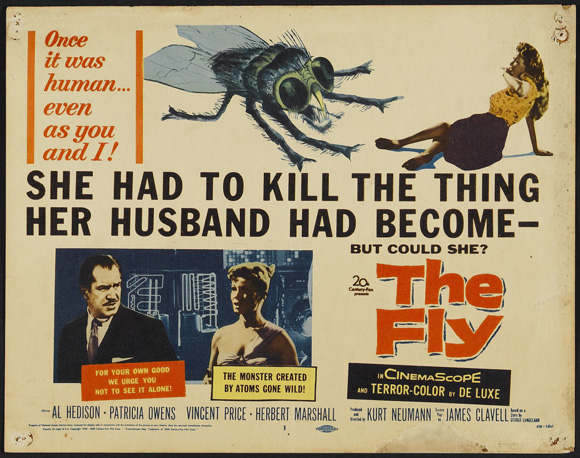
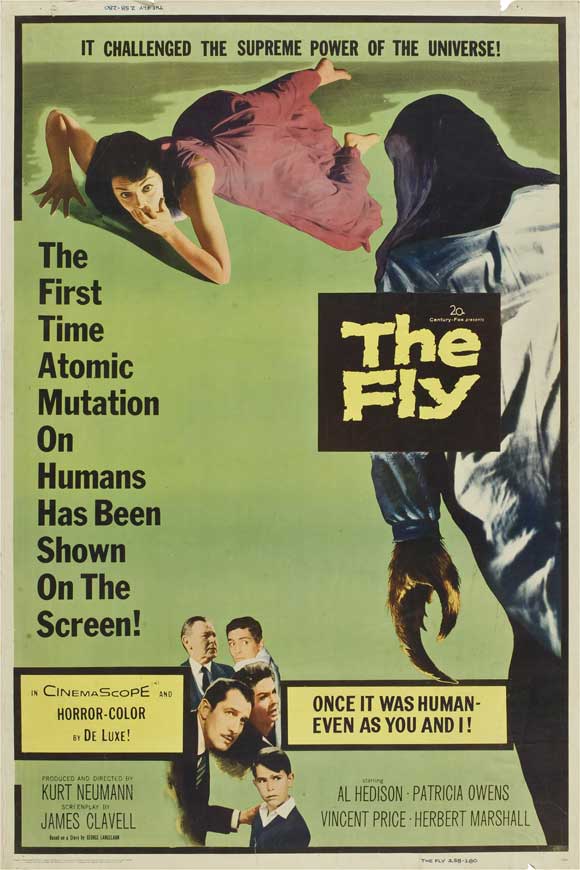
The Fly (1958)

While I'm on the subject of scary movies, I have to reveal the only film that ever kept me wide awake. The Fly, the old one, not the Cronenberg gross-out fest that is way more intelligent that it should have been. I mean the one with Vincent Price, which also was way more mature and intelligent than it should have been.


I was rather young, about ten years old. I was intrigued about The Fly after seeing a Simpsons "Treehouse of Horror episode" which homaged it (including the web scene, more on that later) My parents, absolutely underestimating my sensitivity to anything remotely frightening, thought my repeated vocal worries about the subject matter were entirely unfounded. Yeah, right. To be fair, they hadn't seen the film either, so how were they to know that this cheesy sci fi film could possibly terrify a child who hid behind the sofa whenever she heard the Psycho theme?


Admittedly, the first half of the film is rather tame, though it does contain an extremely effective build-up to the inevitable monster of the title. Those who have seen the film know what I'm talking about. The reveal was frightening enough, when the wife pulls back the black cloth over her transformed husband's head only to reveal that dreaded fly's head, her screams reflected in its multiple eyes. That was enough to send me running up the stairs, and I wouldn't come down again until my parents exasperatedly shouted up the stairs that the "scary part" was over. Foolishly, I believed them, and went down, aware what was going to happen, but underestimating its impact.


So, if that poster at the beginning of the post didn't already give it away, after the scientist with a fly's head ends up getting destroyed by his wife, the fly with the scientist's head is still free. That is, until the scientist's son finds it stuck in a web, and the audience is treated to a 1-2-3 punch of shock:

1- The Voice. Before we get a chance to see anything clearly, we hear that voice. That ungodly high pitched voice, so tiny that it's indistinguishable from a fly's buzzing. It's the scientist, crying out in primal pathetic tones. "Help me! Help me!" And it's coming from the middle of a spider web.

2- The Spider. When we finally get a close-up on the fly/scientist crossover, we are mistreated to the grotesque sight of a bald, toothless human head on a fly's body, wrapped up in spider silk, its lone human arm sticking out helplessly as a gigantic spider looms over him. The Magic School Bus taught me long ago what was going on, and what the impending fate of the fly would be.

3- The Rock. Just as the fly completely covers up its victim, and the fly/scientist gives a spine-chilling scream of fear, Inspector Herbert Marshall, viewing the scene with Vincent Price (ah, 50s casting), grabs a rock and slams it down on the spider, effectively killing it and the fly creature.

So, in simple math, when you add 1.screeching, primal voice of the fly/scientist + 2. horrifying visuals of snarement + 3. a sudden, brutal conclusion to a scientist's wayward experiments, you = 1 absolutely terrified 10 year old.

I know I eventually feel asleep that night, but it took a very long time. I distinctly remember that my leg could not stop twitching, that was how edgy I felt. Even after such jumpers as The Haunting  (1963) and Insidious, I can still get a good night's sleep. But even know, if I come across a scene from a certain 50s sci-fi film that took a silly concept and turned it into a tragedy of  regressive  humanity, subconsciously I can't hold back a shiver. 

Sunday, July 6, 2014

[Rec] (2007)

An example of how viewing environment affects movie watching:

A few months ago, A friend and I watched the great Spanish horror movie [Rec] in his dorm room. The clever use of found footage, combined with the increasing claustrophobia and whammy of an ending, resulted in both us being quite shaky when it finished.  He felt fine, but since I lived across campus, I was really nervous about taking that 10 minute journey alone.

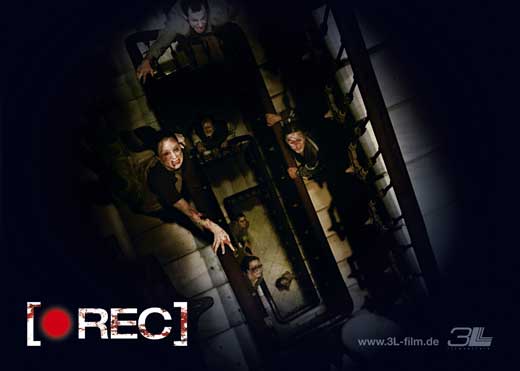
Look at this! Wouldn't you be terrified as well? Source


However, my nervousness was unjustified, because if there was anything that could relieve one of the confining terrors seen on screen, it was a nice cool walk in the outdoors; I got home fine and ended up sleeping without a problem.  So who ended up staying awake until 3 am? That's right, my buddy, who freaked out his roommate by remaining wide awake at that late hour, peeking out from under the covers.

Tuesday, June 4, 2013

Farley Granger Needs an Escape Plan


I have a theory about Farley Granger movies.

While not one of my favorite actors, this swarthy fellow does have a strange sort of appeal. It might because in the five films that I've seen him in, he plays not-to bright characters that end up getting involved in dirty dealings that are way beyond their control, resulting in exciting hijinks. It might also help that these movies range from okay to Amazing Pieces of Cinematic Art (Senso, Strangers on a Train, and They Live By Night tie for the latter).

But back to my previously stated point: I have a theory to present, and it is this: the serious problems that Granger's characters too often found themselves stuck in could be easily solved if they skipped  town and moved to Mexico. I shall support this by using the 5 films I've seen him in as examples.

1. They Live By Night (1948). In this unbelievably gorgeous and sad film, Granger plays an escaped con who, despite the love of his caring girlfriend (the luminous Cathy O'Donnell), is chased to his doom by the law. Partway through the movie, Granger talks of a plan to cross the border into Mexico. However, instead of using his ill-gotten robbery money to find a way to carry this out, he and O'Donnell rent a mountain cabin and give goo-goo eyes to each other on the floor. If only Granger had acted on what he said as soon possible, and skipped town to move to Mexico, he wouldn't have died, and I wouldn't have cried.

2. Rope (1948). In-between 10 minute long takes, Granger and his boyfriend John Dall host a party in their apartment for the friends and relatives of a fellow student, whose strangled corpse is concealed inside a wooden chest that is in full view of everyone. Dall enjoys the situation, while Granger (who did the deed with the rope of the title), gets drunk and breaks under the strain. Now, while I doubt that automatically fleeing the premises after the murder would have allowed him to go scott-free, Granger would at have some sort of chance to escape, and least not have made an ass of himself trying to shot a very disapproving Professor James Stewart; that action could have only added some extra years to his death/and or future prison sentence. At least attempting to skip town and settle in Mexico would have been preferable to that.

3. Side Street (1950). Let loose in NYC, Granger is again married to O'Donnell, this time playing a poor mailman who steals money off some crooks and flees for his life, trying to figure where the money came from while he's doing so. Ignoring the admittedly optimistic ending, our hero does go through plenty of trials (and a pretty sweet car chaise) before he reaches that light at the in end of the tunnel in the last reel. In order to avoid the cops and criminals that jump on his tail, instead of checking into a fleabag motel downtown, he should have kicked up his heels, skipped town, stay in Mexico, and remained there until the heat died down, pregnant wife be damned.


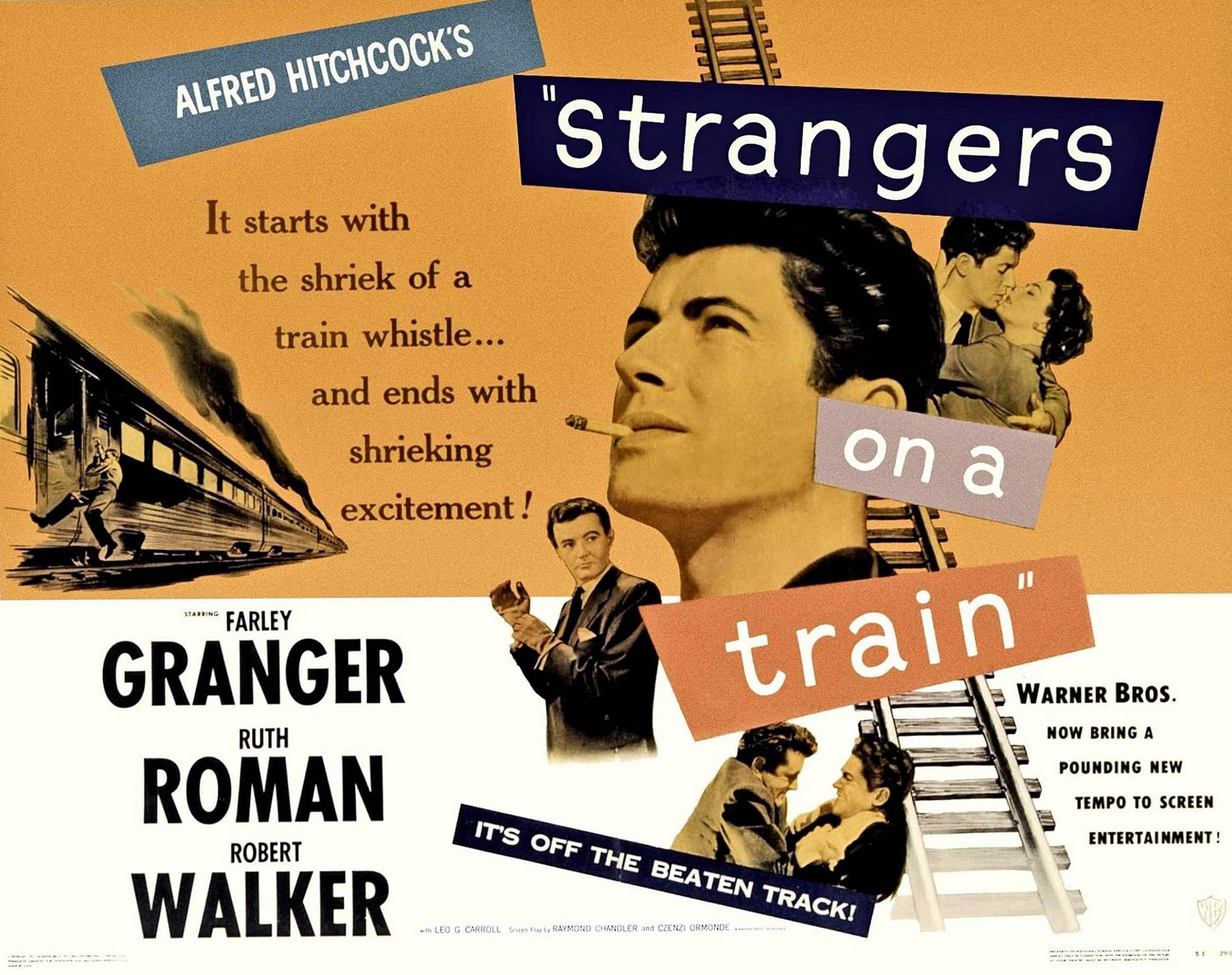
4. Strangers on a Train (1951). If Granger was really sharp, he would have turned down Robert Walker's proposal to exchange murders right away. Heck, as a bonus he could have gotten off that train and took a plane to Mexico! Okay, that would have been a bit much. But even latter in the film, when stalked by Walker in the hope of our "hero" fullfilling his end of the supposed bargain, Granger could have avoided him by skipping town and staying in Mexico for a bit. A final confrontation would have been inevitable, but I doubt that as many lives would be endangered as seen in the movie's ending.

5. Senso (1954). Granger is a real cad in this awesome operatic Italian epic. Long story short, he's a dashing Austrian solider who has an affair with a very clingy and married Alida Valli. When he deserts, he persuades Valli to give him money that would have gone to the very Resistance that he was supposed to be fighting, and to which she is loyal. After getting the dough, does he high-tail it out of the country to live some sort of life in Mexico? Believe it or not, he doesn't! I know that it takes place in the mid-19th century during the Austrian occupation of Italy, but that's no excuse! He just hides out in nearby Venice, and spend the gold on hookers and booze. And what do you know, his girlfriend finds out about it, and she's rather upset about the situation; let's just say that she takes certain actions that make sure Granger pays for his cowardliness.

You would have thought that Farley Granger would have learned his lesson from so many movies, but nope, he has to stay put and allow the plot to go forward. The nerve of him! It makes me so upset that I need to watch something to calm me down...hmmm, I haven't seen Strangers on a Train in while....


Saturday, May 25, 2013

The Lady Vanishes (1938)

Lord knows how often I've seen this movie, but this is the first time that I noticed how detailed the train set is. Considering how the majority of the film takes place on it, I guess I must have taken for granted the insane amount of detail that was put into it. Consider the following:

The different rooms shake. That couldn't have been an easy thing to do. Sometimes, it seems that the actors are bouncing up and down, and I admit that next time I see it, it will take up most of my notice. It gives an added vitality and excitement to the scenes.

The moving scenery. Easier to comprehend doing than the previous point, but still effective. The numerous projections of mountains and woods really adds to the flavor of the piece, and serve to remind us of the greater political machinations going on outside the cars.

The lighting. This continued non-stop. The flickering lights on the different faces presented gave us a detail too often overlooked in train-set movies: sign of technology passing by. When the train, and the plot, moves further down the line with the disappearance of Ms. Froy, the lights become non-existant, and a more natural, typically all encompassing lighting takes over, ironically when things get more complicated.

Sunday, July 17, 2011

What a Disaster!

After seeing the classic (???) disaster films The Towering Inferno and Earthquake, a certain similarity between them struck me as both interesting, yet bewildering.

It wasn't the cardboard characters, the emphasis on special effects, the amazingly corny dialog, or how  overlong they were. It was this:

The filmmakers have some kind of grudge against skyscrapers.

Both films have gung-ho male leads who wail at some point about how whatever gimmicky disaster featured could have been averted if mankind had been content to have short buildings, instead of building great towers that seem to welcome Armageddons with open arms.


Well, they don't put it so eloquently, but you get the idea. There is plenty of hate going around for tall buildings. Not the lazy government people (and believe me, they always turn up in these kinds of films), not the shoddy cuntruction that contributes to the descruction and the loss of lives. But the building itself.

So in the mindset of the films:

Skyscrapers = Towers of Babel = magnets for disaster = Bad news for mankind!

Both images from impawards.com

Saturday, June 11, 2011

A Little Experiment: Part 2


I did it. I rewatched Man with a Thousand Faces (1957), fulfilling the plans of my past post. It is rather strange, viewing something from my youth, at the dawning of my interest in old films. And what can I say about this second viewing experience?

Well, for one thing, I now know what it must feel for a baseball fan to watch The Pride of the Yankees or  Fear Strikes Out: plenty of (mostly fictional) elaboration on the personal life of the real-life protagonist, and not enough visualization of what made them great. Now, sometimes that it understandable. Lord knows how much more I could stand to watch Anthony Perkins play ball like a girl when portraying Jimmy Piersall.

But I digress. I am not here to discuss baseball biopics, but an actor biopic, specifically of the legendary  Lon Chaney Sr. And boy, is this a whopper. It begins with Chaney's youth, raised by deaf-mute parents.

He works in Vaudville with his wife (Dorothy Malone), who is unlikable because she:

1. Has a paranoid fear of their unborn child (and future Wolf Man) being born deaf

2. Puts her singing career before her family

Because she is such a bad mother, Chaney divorces her, and gets a relatively steady job getting extra work and bit parts in the picture business. He gets married to a wonderful woman (Jane Greer), and his carer takes off after his work as a fake cripple in The Miracle Man.

I guess that I should point  out that Cagney was about 56 when he made this film, 9 years older than Chaney was when he died. While age differences between actors and their real-life counterparts are far from unusual, in this case it is especially jarring.

There are reenactments of scenes from such classic Cagney films as The Hunchback of Notre Dame, The Phantom of the Opera, and Laugh Clown Laugh. This would cool, if they got the frickin' reenactments right! But I could let those pass by, were it not for one thing...The make-up.

Good Lord, the make-up. Or should, I say, the really crude rubber masks that bare no resemblance to Chaney's original classic designs. I know that Cagney's face was rounder than Chaney's, so that they would not look similar, but still...the horror, the horror.

My memories of the film were pretty close, considering it had been about 10 years since I last saw it. I don't why certain parts stuck out so much. It wasn't because I considered it a particularly great film at the time, and I still don't, but there must have been something that intrigued me. At the time I first watched it, I must have already known about Chaney and his make-up creations. It is quite possibly my first bio-pic.
Overall, I thought that it was an okay, if disappointing film.

Sunday, April 17, 2011

A Little Experiment: Part 1


It is funny what one can remember about a film one has seen once a long, long time ago. There are moments, flashes that are very clear, but not enough to form a coherent.

One of these films that fits the description is Man of a Thousand Faces (1957), a bio-pic staring James Cagney, who portrays the great silent actor and make-up master Lon Chaney This film is rather special,  because not only does it have the honor of being my first Cagney film, but also my cinematic introduction to the works of Chaney himself.

Just for the heck of it, I will see just how accurate these 10+ year old memories of mine are: In this post, I will jot down everything that I remember about the film, (in as close to chronological order that I can muster). I will then watch it for the second time in my life, and see how accurate my memories are.

It starts out in Chaney's childhood. You see him on his way home, it looks like he was in a fight. His young sister chides him, saying that Mama would not be happy. He goes to his mother, and comunicates with her in sign langue, ( one of these gesetures looks like clap). She "talks" with him, and that brings a smile to his face.

When he is an adult, he is in 1919's The Miracle Man (as I have latter figured out). The scene is filmed in which he is a twisted up criple who crawls towards a prist. The prist lifts his hand, looking holy, and Chaney untwists him self slowly. He emotionally kisses the man's hand. The scene finished, Chaney stands up and procededs to do a little tap dance.

He is married to a woman who obsessed with their baby being born deaf, because of Chaney's parents. The baby's post-birth spanking is shown in silhouette in the hospital, and the wife is at first happy because the baby is crying, but becomes upset when the doctor tells her that crying is not influenced by what he hears.

Later, Chaney stands over the baby's crib, with his wife the background. She has continued to express worry that their son is deaf. Exasperated, he claps his hands loudly, and the baby cries. The parents are relived, and comfort the child.

The wife meets Chaney's parents, and greets them with a shy "hello", but is surprised when she finds out by default that they are deaf. She goes away to cry, and Chaney talks with his mom and she brings a smile to his face, echoing the beginning of the film. He then goes to his wife, and tells him that his Mom was right: that he should have told his wife that they were deaf.

The a filming of the whipping scene in The Hunchback of Notre Dame (1923) is interrupted by some people, and there is an argument between them and Chaney (while he is still in make-up, which does not look similar to the original film).

The famous unmasking scene from The Phantom of the Opera (1925) is being filmed. Christine (with long blonde hair, for some reason) is sneaking up behind the masked Phantom, who preoccupied with playing the organ. She removes the mask from behind, and faints with shock when she sees his hideous visage. The Phantom (who has long straight white hair, for some reason) looks down at her still figure, and collapses from grief. After a call of "cut", Chaney and the actress get up, and they walk off while he pats her hand, talking cordially.

Chaney gets remarried to a nice, non-nerotic woman. You know she is nice, because she talks to the parents in sign language and hugs them.

Chaney and his son are talking in sign language at the edge of a dock. His second wife asks what's going on, Chaney says that they are having a "guy talk", and continues to sign.

Chaney is on his deathbed. No longer able to talk, he communicates with sign language. He tells his son to pick him his old make-up box. The son obeys, and Chaney takes out a piece of chalk and adds "Jr." to the end of his name. He smiles, and dies.

Saturday, March 5, 2011

Putting the "Meh" in Memento (2000)


I have no strong feelings about Memento, not one. I can maybe manage a little respect for its uniqueness in structure and plot, and well as its relatively realistic take on short term memory, but that is about it.

Last Tuesday I viewed this so-called masterpiece for the first time, and after is was all done, I could not for the life of me figure out what the big deal was. It wasn't that I despised or even disliked it: I felt nothing, just a desire to get some homework done.

Considering, there is nothing really wrong with this movie. The acting is....okay, and the plot is....creative, and.....wait, wait, let me back up:

Memento, in case you don't know, is about Leonard Shelby (a bleach-blonde Guy Pearce), who has a form of amnesia that prevents him from keeping new memories. The film's gimmick is that it is told backwards, with segments lasting as long as Shelby's short term memory. On top of that, intercut throughout is a black-and-white sequence of Pearce in a hotel room, talking on the phone. Eventually, it comes together in the end.

Now, I have never had a great interest in seeing this film. There was always some other I could think of that I wanted to see more. But I was invited by a group of friends, and I thought: "Why not? I might as well see what the big deal is."

And after my first viewing, after going through the twists and turns of the plot, do you know what my reaction was? "Meh". Just "meh". As in "I've seen better, I've seen worse. What's for dinner?"

You see, I can usually figure out my true feeling about a movie from how I feel afterwards. If it is something I really like, such as The Set-Up or Re-Animator, I get energetic. I feel like jumping off walls, running through my dorm, calling out to the world that what I watched was amazing. Or, if what I saw was pensive and/or dark, I feel myself grow a bit serious, and mull over what I just watched, piecing together how great it was. As for bad films....I either get really tired or really angry, depending on what remains of energy I have left over from the experience.

But with "meh" movies, I just don't feel anything. Nada. Zip. I have no enthusiasm or even a feeling of nihilism. Even when I can think of numerous positive aspects of the film from the top of my head, I can't bring my self to say that I thought it was really good.

Memento fits this to a tee. Guy Pearce was good, but then again he gives pretty much the same performance as in The Time Machine and L.A. Confidential. The rest of the cast, were good, but then again they were not that memorable, and I continually thought that other actors could have inhabited the roles just as well.

The script was literate, and had a couple of really good lines (my personal favorite being from Pierce: "Oh, I'm chasing this guy...no, he's chasing me." It makes sense in context.

The plot was I guess interesting: less of a Who-Dunnit than a Head-Scracher. Some reviews have chosen to call it a Neo-Noir, and I can see where they are coming from: The (really) confused male protagonist with a past, the mysterious woman that helps him, a murder within the first 5 minutes, etc.

In fact, to me, the beginning was the film's highlight. You first see a Polaroid picture being shaken repeatedly, but instead of getting sharper, it fades away to nothingness, a perfect metaphor for the protagonist's memory throughout the film.

The reverse telling of the story is unique, forcing the viewer to put together the plot as if it were pieces of a picture-less puzzle. The end result is clever, but perhaps too clever for its own good. At the end of the film, my first reactions were less of excitement than of frustration, which then quickly ebbed away to nothingness I did not enjoy this film, I survived it. I was shown a cool premise told backwards, and nothing more. So now, if someone asks me what I thought of the great Memento, all I will be able to say is: "Meh, I've seen better, I've seen worse."